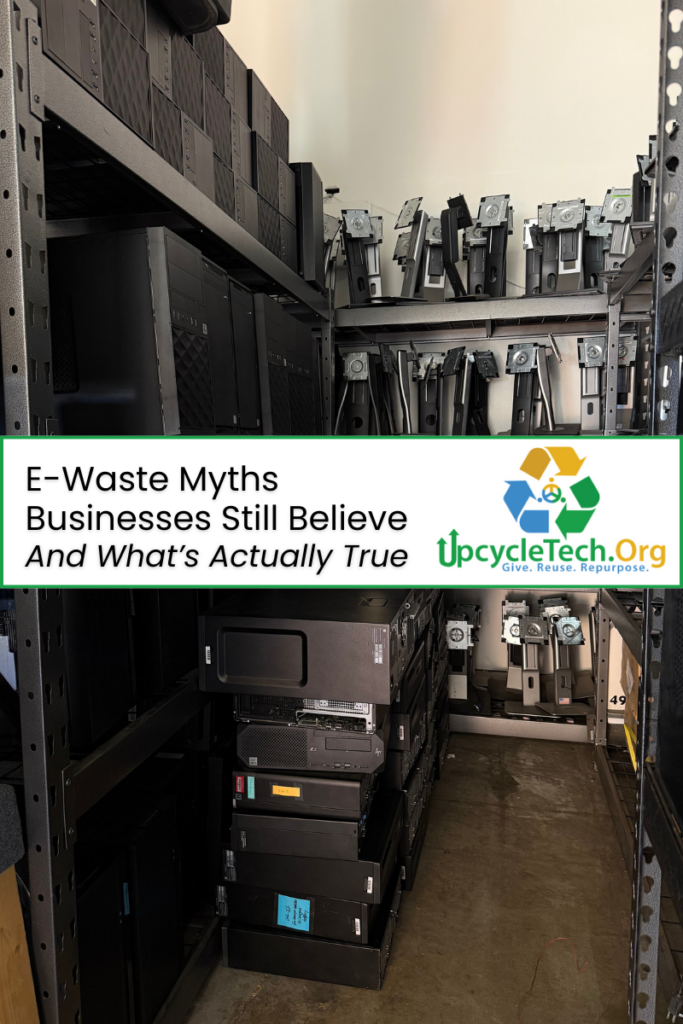
If you work in an office, studio, warehouse, or any kind of business space in 2026, you already know tech moves fast. What most companies don’t talk about is what happens when all that gear gets replaced.
Spoiler: it usually ends up in closets, storage rooms, or landfills way longer than anyone wants to admit.
Here are the most common e-waste myths we still see in 2026… plus what’s actually going on.
Myth #1: “Recycling Electronics is Expensive.”
Reality:
Sure, throwing old computers in the trash seems cheaper — until you realize there are disposal fees, data risks, and zero chance of recovering value.
Meanwhile, working with a recycler or refurbisher can:
- Pull useful parts
- Resell working gear
- Reuse displays and accessories
- Keep heavy materials out of landfills
In other words: the tech you think is “trash” can help offset upgrade costs.
Myth #2: “Nobody Wants Our Old Office Tech.”
Reality:
In 2026, there are entire communities hunting for “older” hardware. Seriously.
- Retro gaming fans want CRTs and old Macs
- Creators want displays, audio gear, and capture hardware
- Startups and freelancers want affordable workstations
- Homelab hobbyists want servers and networking gear
Your office might see a pile of junk, but the internet sees a shopping list.
Myth #3: “Recycling Just Means Shredding Everything.”
Reality:
Sure, some stuff does get shredded (like dead drives) but the process today is way more nuanced. Depending on the item, it might get:
- Wiped and resold
- Tested and refurbished
- Stripped for parts
- Harvested for metals
- Broken down for plastics
Recycling is no longer “destroy and dump” – it’s closer to triage and reuse.
 Myth #4: “Refurbished = Low Quality.”
Reality:
This one made sense 10 years ago, but 2026 refurb quality hits different.
Most refurbished tech today comes from clean, consistent sources. Think office lease returns, school upgrades, or studio refreshes – it’s tested, cleaned, wiped, and often performs nearly the same as new for a fraction of the cost.
That’s why refurbished laptops and displays are everywhere now — remote workers, small businesses, classrooms, and even enterprises use them.
Myth #5: “We Can’t Recycle Because of Data.”
Reality:
Data worries are real, but letting old hard drives sit in a cabinet for four years isn’t a security strategy either.
Modern recyclers wipe drives, destroy the ones that can’t be wiped, and document the process. It’s basically “spring cleaning but with receipts.”
Myth #6: “E-Waste Isn’t Our Problem.”
Reality:
If your business buys electronics, upgrades electronics, or stores electronics… it’s your problem.
Even if you don’t care about sustainability, you probably care about:
- Saving money
- Making space
- Reducing clutter
- Brand reputation
E waste touches all of that.
So What Should Businesses Do in 2026?
Here’s the simple playbook more companies are using now:
- Don’t hoard, do an annual tech cleanout.
Closet e-waste is the worst e-waste. - Work with people who refurbish, not just trash.
More reuse = less cost = less waste. - Make refurbished part of upgrades.
New isn’t always better (or necessary). - Track what comes in and what goes out.
Not for compliance… for sanity.
Bottom Line
Electronics don’t magically disappear when we’re done with them. The good news is that reusing, refurbishing, and recycling is easier (and cheaper) today than it’s ever been.
Less landfill, less clutter, less money wasted — it’s a win all around.